
Best Airbrush Primers for Miniature Painting
By BrushBench . 9 min read . Updated September 2026
Airbrush primers deliver advantages rattle-can primers cannot match: thin, detail-preserving coats that let you see surface texture clearly before painting, perfect adhesion on resin and metal, and cost-per-miniature that beats any spray can over a full army. The hobby settled on Vallejo Surface Primer as the benchmark because it does everything right: grey base that suits every colour scheme, polyurethane-acrylic formula that bonds reliably, and enough body to flow smoothly through a 0.3mm to 0.35mm nozzle without aggressive thinning. This guide covers the best airbrush primers, how to thin them correctly, and when to reach for a rattle-can instead.
Quick answer
Vallejo Surface Primer Grey is the best airbrush primer for miniature painting, delivering thin, detail-preserving coats with excellent adhesion to plastic, resin, and metal. Badger Stynylrez is a durable alternative with a high-build formula, and Army Painter Color Primer offers a white option for contrast paints.
This guide contains affiliate links. BrushBench may earn a commission at no cost to you.
What makes a primer airbrush-ready
Airbrush primers are formulated differently from rattle-can primers. They have lower viscosity to flow through a fine nozzle without clogging, a lower pigment load than basecoats so they do not clog on every colour transition, and often a polyurethane-acrylic binder that grips plastic and resin more aggressively than acrylic alone.
The best airbrush primers are thin enough to spray at 15 to 25 psi without aggressive thinning, yet build enough adhesion over one or two passes that a single coat is sufficient for basecoating. Rattle-can primers often require two or three passes at a heavier, thicker consistency that obscures fine surface detail.
When shopping, look for primers specifically labelled for airbrush use. Water-based polyurethane-acrylic primers perform better than pure acrylic over bare resin and metal. Primers marketed as all-purpose hobby primers often have a thicker viscosity and require significant thinning to run through a fine nozzle.
Vallejo Surface Primer: the hobby standard
The Vallejo Surface Primer Grey (200ml) is the benchmark airbrush primer because it does every job well. It runs through a 0.3mm to 0.35mm nozzle with just a light thinning, bonds reliably to plastic, resin, and bare metal, and dries to a smooth, detail-preserving coat that is darker than white but lighter than black primer.
The grey tone suits almost every colour scheme: it provides enough value separation for light colours to read clearly, while dark colours still benefit from its neutral tone. A 200ml bottle costs a fraction of equivalent rattle-can coverage and lasts painters months. Thin it with Vallejo Airbrush Thinner, about 1:4 primer to thinner, and it flows perfectly at 18 to 22 psi.
The polyurethane-acrylic formula is the reason Vallejo Surface Primer is the standard for resin. Bare resin that has been stripped from failed paint jobs or has residue from releasing agents sometimes resists acrylic primers. Vallejo Surface Primer grips it reliably. On plastic and primed metal it is equally effective.
Available in grey, white, and black, the grey is the most versatile and the first choice for painters new to airbrush priming. The white option suits contrast and speedpaint schemes where you need maximum colour pop. The black is the least common but useful for dark colour schemes where a value jump from black primer to midtone colour is intentional.

Vallejo Surface Primer Grey (200ml)
The hobby airbrush primer benchmark: a grey polyurethane-acrylic formula that bonds to plastic, resin, and metal and preserves fine detail better than any rattle-can.
Badger Stynylrez: the high-build alternative
The Badger Stynylrez Airbrush Primer (2oz) competes in a different space than Vallejo Surface Primer. It is thicker, with a higher pigment load designed to fill minor scratches, mould line remnants, and surface imperfections that thinner primers do not address.
Stynylrez requires more thinning than Vallejo Surface Primer: aim for 1:3 primer to thinner before spraying, and the result is a slightly more opaque coat that builds faster. This matters for painters who prime in multiple quick passes or who work resin miniatures with minor casting imperfections.
The trade-off is that Stynylrez is slightly less detail-preserving than Vallejo. Fine recesses and small details are not obscured, but the coat is visibly thicker. Most painters use Stynylrez on terrain, bases, and rough-cast resin pieces where the extra opacity and fill properties matter more than preserving the finest details.
Badger Stynylrez is available in black, white, grey, and brown. The availability varies by region, and some colours have longer lead times than others. For painters in regions where Vallejo is expensive or unavailable, Stynylrez is the reliable alternative that every airbrush painter should know about.

Badger Stynylrez Airbrush Primer (2oz)
Water-based polyurethane-acrylic primer in a hobby bottle format, with excellent surface adhesion and a high-build formula that fills minor surface flaws.
White primer for contrast and speedpaints
The Army Painter Color Primer Matt White Spray serves a specific purpose: it is the base that contrast-style and speedpaint formulas are designed to sit on top of. These paints are formulated to self-shade over a light surface, and white primer lets that shading effect work correctly by providing the light undercoat that the thin paint layers depend on.
Airbrush-ready white primer is harder to find than grey or black, but Vallejo Surface Primer is available in white and works identically to the grey version through an airbrush. The choice between Vallejo white and rattle-can white is the same as with any primer: airbrush white gives finer control and better economy per miniature, while rattle-can white requires no setup.
White primer also improves bright colour schemes that use traditional layering rather than contrast paints. Yellows, oranges, and pale flesh tones all benefit from a white or light grey base that gives them a clean foundation to build vibrant colour on.

Army Painter Color Primer Matt White Spray
White rattle-can primer that bonds to plastic and metal and provides a bright base for contrast paints, bright colour schemes, and bone tones.
Thinning airbrush primers: ratios and technique
Vallejo Surface Primer needs minimal thinning. Mix it 1:4 primer to Vallejo Airbrush Thinner before loading the cup, and test spray on spare plastic to confirm the consistency. The primer should flow smoothly at 18 to 22 psi without sputtering, and the coat should be even and consistent.
Badger Stynylrez requires heavier thinning, around 1:3 primer to thinner, because its thicker base viscosity is by design. Mix thoroughly before spraying, since the pigment load in Stynylrez can settle between uses. Test the consistency on scrap material first, since airbrush primers behave differently in different humidity and at different spray pressures.
Do not thin with plain water alone. Water is fine for thinning standard hobby acrylics for the airbrush, but primer is formulated to work with dedicated airbrush mediums. Vallejo Airbrush Thinner is the correct choice for Vallejo primers. Badger offers its own airbrush medium designed for Stynylrez. Mixing either primer with plain water can compromise adhesion.
If the primer sprays inconsistently after mixing, it is likely sitting too thick or too thin. Adjust the mix in small increments: if it sputters and splatters, thin it slightly more. If the coverage is weak and watery, use slightly less thinner. The right consistency is learned by practice rather than measured exactly.
Application technique for airbrush primers
Hold the airbrush 20 to 25 centimetres from the miniature and spray in light, even passes. One thin pass is better than one thick coat: let the first coat dry to the touch, around five to ten minutes, before applying a second pass if full coverage was not achieved on the first.
Cover all angles on the first pass: undersides, sides, and front. Primer needs to coat plastic or resin completely to give adhesion. Any bare spot left unprimed will cause paint to chip or peel during normal handling.
Set working pressure between 15 and 25 psi regardless of which compressor you own. Higher pressure can cause overspray and splattering. Lower pressure may cause sputtering if the primer is not thinned correctly. Most painters settle on 18 to 22 psi for airbrush primers.
Let the primer cure fully before basecoating. Vallejo Surface Primer and Badger Stynylrez both take 2 to 4 hours to reach full strength. Painting over incompletely cured primer can cause the basecoat to bead or chip. Many painters prime in the evening and paint the next morning.
Featured in this guide
Vallejo Surface Primer Grey (200ml)
The hobby airbrush primer benchmark: a grey polyurethane-acrylic formula that bonds to plastic, resin, and metal and preserves fine detail better than any rattle-can.
Badger Stynylrez Airbrush Primer (2oz)
Water-based polyurethane-acrylic primer in a hobby bottle format, with excellent surface adhesion and a high-build formula that fills minor surface flaws.
Army Painter Color Primer Matt White Spray
White rattle-can primer that bonds to plastic and metal and provides a bright base for contrast paints, bright colour schemes, and bone tones.

Iwata Eclipse HP-CS Airbrush
The gravity-feed, dual-action benchmark for miniature painting, with a 0.35mm nozzle and a large 7ml cup that handles both fine detail and broad basecoating.
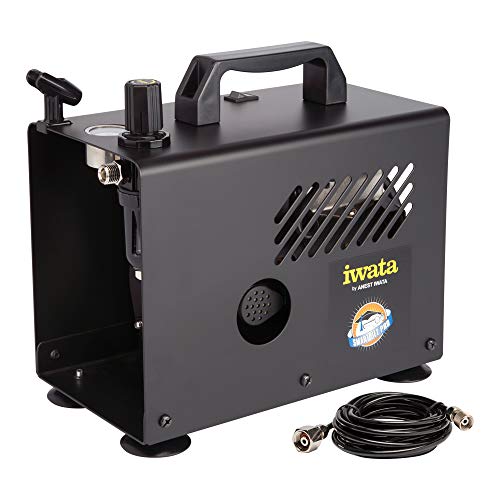
Iwata Smart Jet Pro Airbrush Compressor
1/6 horsepower tank-equipped compressor with an auto shut-off and quiet operation, designed specifically for single-airbrush hobby and art use.
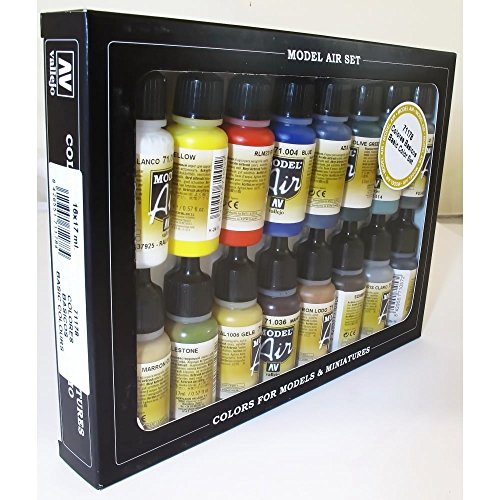
Vallejo Model Air Starter Set (16 Bottles)
Pre-thinned airbrush-ready acrylics in a 16-colour starter set, formulated to run through a 0.3mm nozzle without additional thinning.

Citadel Chaos Black Spray Primer
The most-documented rattle-can primer in the hobby, a black basecoat and primer in one that works out of the can on any primed-plastic or metal miniature.
Keep reading
Related comparisons
Related roundups
FAQ
Frequently asked questions
Can I use rattle-can primer in an airbrush?+
Not safely. Rattle-can primers are formulated for spray atomization at high pressure and have much thicker viscosity than airbrush primers. Attempting to thin and spray them through an airbrush will clog the nozzle, damage the needle, and potentially ruin the airbrush. Airbrush primers are purpose-formulated for fine-nozzle delivery.
How much should I thin airbrush primer before spraying?+
Vallejo Surface Primer needs light thinning, roughly 1:4 primer to Vallejo Airbrush Thinner. Badger Stynylrez needs heavier thinning, around 1:3. Test on scrap plastic first: the primer should flow smoothly at 15 to 25 psi and leave a thin, even coat without sputtering or splashing. If it splatters, thin more. If coverage is weak and watery, use less thinner.
What colour primer should I use for miniature painting?+
Grey (Vallejo Surface Primer Grey) is the most versatile starting point for any colour scheme. White suits bright colours and contrast paints. Black is traditional and works well for dark schemes. Most painters prime with grey and then do zenithal highlighting in white or light grey from above for an instant shading foundation.
Do I need a dedicated airbrush or can I use a hand-brush to apply airbrush primer?+
You can brush on airbrush primer, but the result is not as smooth as spraying. Airbrushed primer dries to a glassy, uniform surface, while hand-brushed primer leaves brush strokes that are visible under magnification. Many painters hand-brush into tight recesses or on single-piece figures after airbrushing the main surfaces.
How long does airbrush primer take to cure before basecoating?+
Vallejo Surface Primer and Badger Stynylrez dry to the touch in 15 to 30 minutes under normal conditions, but full cure to paint-ready strength takes 2 to 4 hours. Painting over incompletely cured primer can cause the basecoat to slide or bead. Most painters prime in the evening and paint the next morning.