Best Miniature Paints
Choosing miniature paints is not just about picking a brand. It is about matching the paint formulation to the way you work, the techniques you want to learn, and the miniatures you paint most often. Water-based acrylics dominate the hobby because they are safe, fast-drying, and thinnable with water. Within that world the differences between ranges are real and worth understanding before you spend money. Citadel is the most widely available and community-documented range, while Vallejo's dropper-bottle system is the professional standard for airbrush work and consistent mixing. Army Painter sits in the middle on price and is a strong beginner on-ramp. Scale75 and AK Interactive are premium artist-grade ranges used by competition painters for their depth and pigment load.
BrushBench may earn a commission from links below . Updated June 2026
What is the best Miniature Paints?
The Vallejo Game Color 16-bottle Starter Set is the best pick for most painters starting out or building a flexible palette, delivering consistent dropper-bottle acrylics at a price that covers every basic color category. Painters already in the Games Workshop ecosystem who want fast one-coat coverage should look at Citadel Base paints instead.
 Top Pick
Vallejo Game Color 16-Bottle Starter Set
The most practical beginner palette in the hobby: 16 dropper-bottle acrylics covering every major colour group, formulated for plastic and metal miniatures.
Best for Beginners building their first palette and painters switching from pots to dropper bottles.
 2
2 Citadel Shade Paint Set (8 Pots)
Eight of the most-used Citadel shade washes in one set, including Agrax Earthshade and Nuln Oil, which are staples in almost every painter's kit.
Best for Any painter who wants reliable, fast shading that works across every paint brand.
Best Value
Scale75 Scalecolor Artist Set (8 Bottles)
Artist-grade matte acrylics with a matte, velvety finish and high pigment load favoured by competition painters for wet-blending and glazing.
Best for Intermediate and advanced painters focused on blending, glazing, and display-quality miniatures.
 4
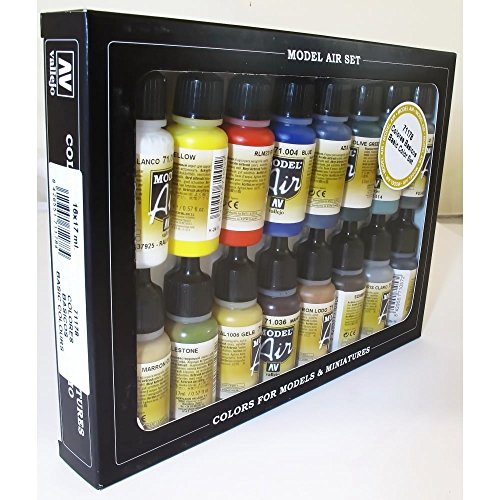
4 Vallejo Model Air Starter Set (16 Bottles)
Pre-thinned airbrush-ready acrylics in a 16-colour starter set, formulated to run through a 0.3mm nozzle without additional thinning.
Best for Airbrush painters who want a ready-to-spray paint line without thinning standard acrylics.
5 Citadel Base Paint Set (11 Pots)
Games Workshop's high-pigment base range bundled in an 11-pot starter set, designed to cover plastic in one or two coats straight over primer.
Best for Painters in the Games Workshop ecosystem who want the officially documented paint range.
 6
6 Army Painter Warpaints Fanatic Mega Paint Set
50-pot collection covering the full Warpaints Fanatic range in one purchase, with improved pigment density over the original Warpaints line.
Best for Painters who want to buy once and have a comprehensive palette without ordering individual colours.
7 Citadel Contrast Starter Set (6 Pots)
Six core Contrast colours that combine basecoat and shade in a single application, designed for fast, high-quality results on textured surfaces.
Best for Painters who batch-paint rank-and-file miniatures or want gaming-table quality results quickly.
 8
8 Army Painter Speedpaint 2.0 Mega Set
50-colour set of Army Painter's self-shading speedpaint formula, improved over version 1.0 for reduced reactivation when layering over dried coats.
Best for Painters who want the speed of contrast-style paints across a broad colour range with the Army Painter range.
The method
How we chose
We evaluated each option on fit, build quality, daily usability, and value. Our top pick, Vallejo Game Color 16-Bottle Starter Set, earned the spot. The best beginner paint set in the hobby, practical dropper bottles and a full colour range at a reasonable price. The comparison above highlights exactly who each pick is best for.
Related guides
Head-to-head comparisons
FAQ
Best Miniature Paints: FAQ
What is the best miniature paint brand for beginners?+
Vallejo Game Color and Army Painter Warpaints are the two most beginner-friendly ranges. Both use dropper bottles that prevent drying on the palette, cover well in two coats, and cost less per pot than Citadel. Vallejo has a larger colour count and the dropper bottle makes thinning intuitive. Army Painter's starter sets bundle colours with brushes, which cuts the initial kit cost.
Do I need to thin my miniature paints?+
Yes, almost always. Paint straight from the pot is usually too thick for smooth, blended coverage and can obscure fine detail. Adding one or two drops of water or a dedicated medium like Vallejo Airbrush Thinner brings paint to a milky consistency that flows cleanly, dries flat, and leaves detail crisp. The right consistency varies by technique, but unthinned paint is the most common mistake beginners make.
What is the difference between base, layer, and wash paints?+
Base paints are high-pigment formulas designed to cover bare plastic or primer in one or two coats. Layer paints are thinner and more translucent, meant for building colour in smooth coats over a base. Washes are very thin, ink-like formulas that flow into recesses and shade detail automatically. Most painters use all three in sequence: prime, base, shade with a wash, then highlight with a layer paint.
Are contrast and speed paints worth it for beginners?+
Yes, if you want painted miniatures fast. Contrast and speedpaint formulas are designed to do the job of a base coat and wash in one step by flowing into recesses and leaving raised areas lighter. The result is not competition-quality, but it is genuinely good for gaming-table standard and far faster than traditional layering. Most experienced painters use them for basecoating large models or batch-painting rank-and-file troops.
Can I mix different miniature paint brands together?+
Generally yes. Most miniature paints from major brands are water-based acrylics and mix with each other without problems. Citadel, Vallejo, Army Painter, and Scale75 can all be blended on the palette. The main thing to watch is consistency: different brands have different flow agents and pigment loads, so you may need to adjust your water ratio when mixing brands. Washes and technical paints should generally stay in their own category.